Launching a Content Creator Career with Professionalism
Podcast episode aggregator and e-commerce for a YouTube channel


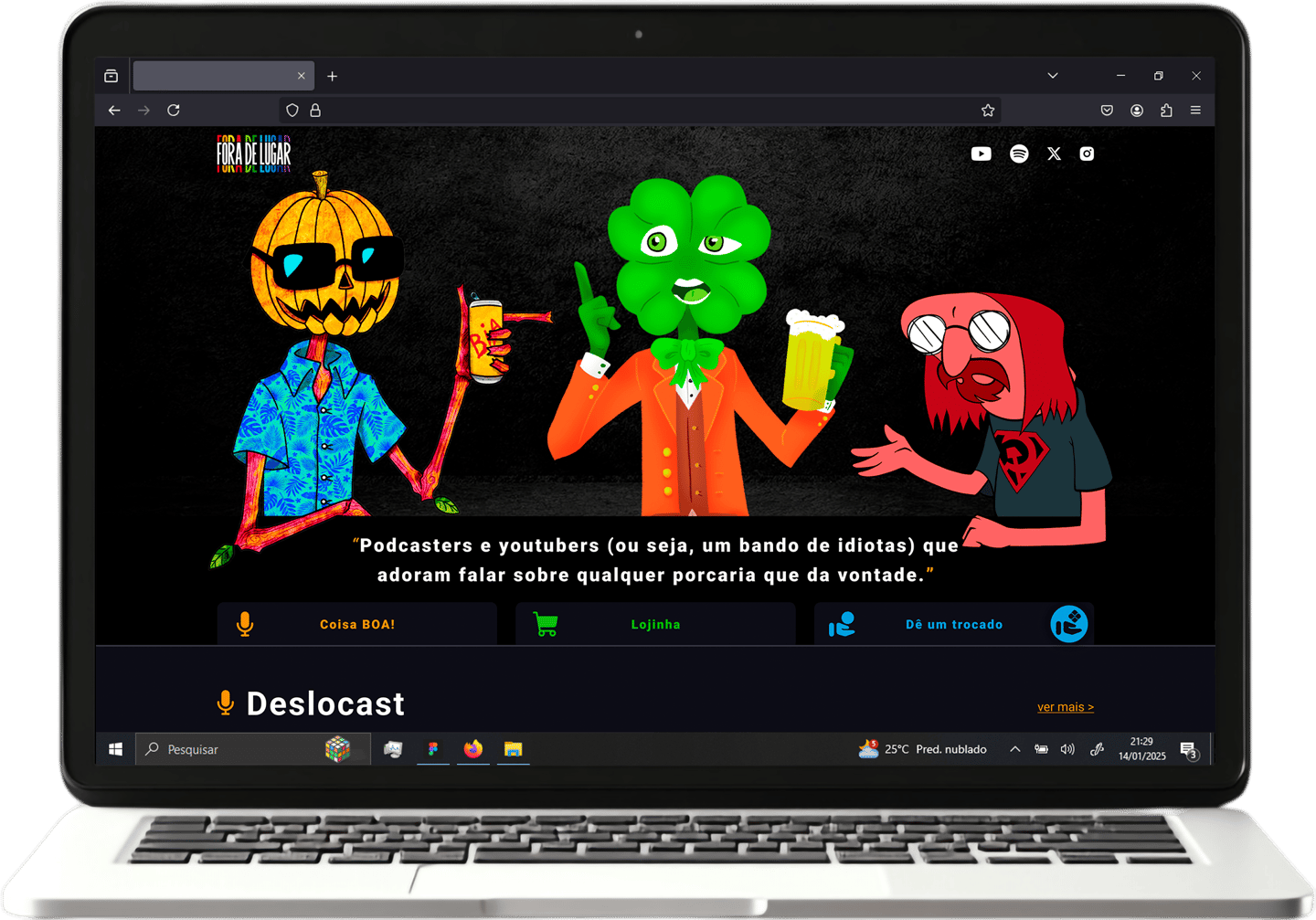
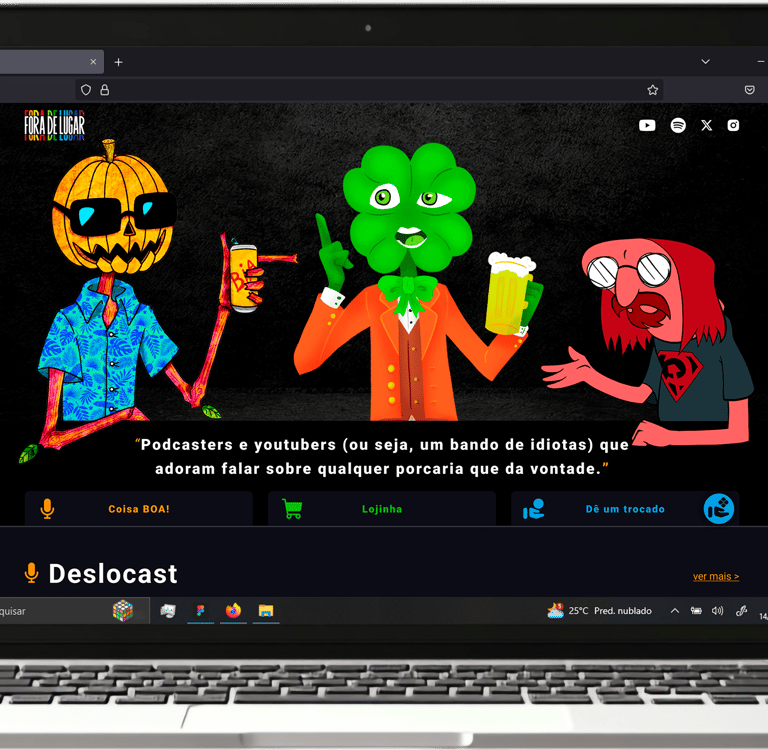
My role
User research · Mapping · Wireframing · Development of visual identity · Prototyping
Timeline
October • November (2023)
Team
(Me) Product Designer
Full Stack Developer
Problem
Reliant on platforms to make money, creators end up limiting their own content
A group of friends decided to start a content creation company in the geek entertainment space. To make a living from it, they depend on monetization from the platforms where they publish, and any guideline violation can result in the loss of their channels' revenue for an indefinite period. To avoid this risk, creators end up limiting what they produce.
Their goal is to generate profit directly from their own community, so they can create videos, livestreams, and podcasts with more freedom. To that end, one of the team members (a developer) invited me to plan and design a solution to this problem from scratch.
Investigation
Understanding who follows this kind of content to find out how willing they are to support creators
As the channel doesn't exist yet, there was no analytics data to consult. So, I interviewed regular viewers of YouTube channels and podcasts that create the same type of content this group intends to produce, in order to understand their habits, what they value in a channel, and what they think about financially supporting creators.
User research
9 consumers were interviewed:
3 subscribers to a creator's perks package;
3 people who make occasional donations on a streaming platform;
3 who have never supported a creator.
Learnings:
Most of them are willing to financially support their favorite creators, especially when they feel a personal connection with the content or the community;
They don't want to go through a complicated process to do it. Creating new accounts, filling out long forms, or dealing with limited payment methods were the main reasons people gave up or stopped supporting.


Solutions
Planing + Sketching + Testing
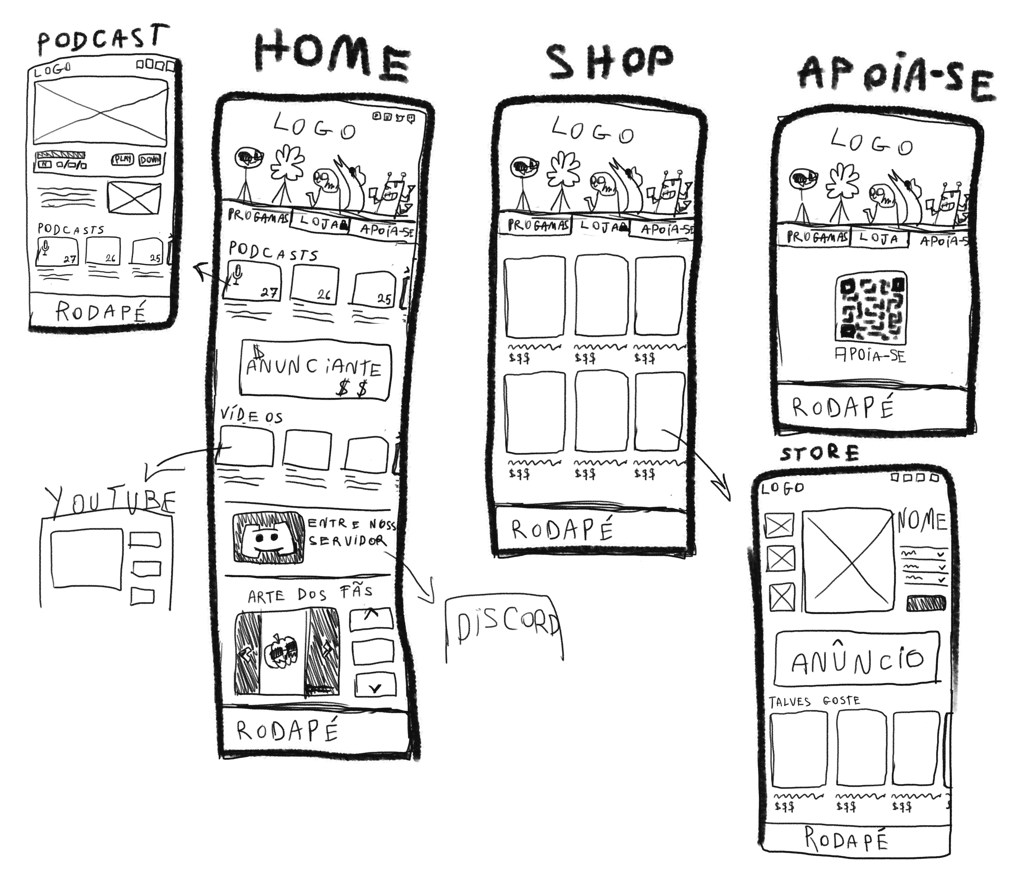
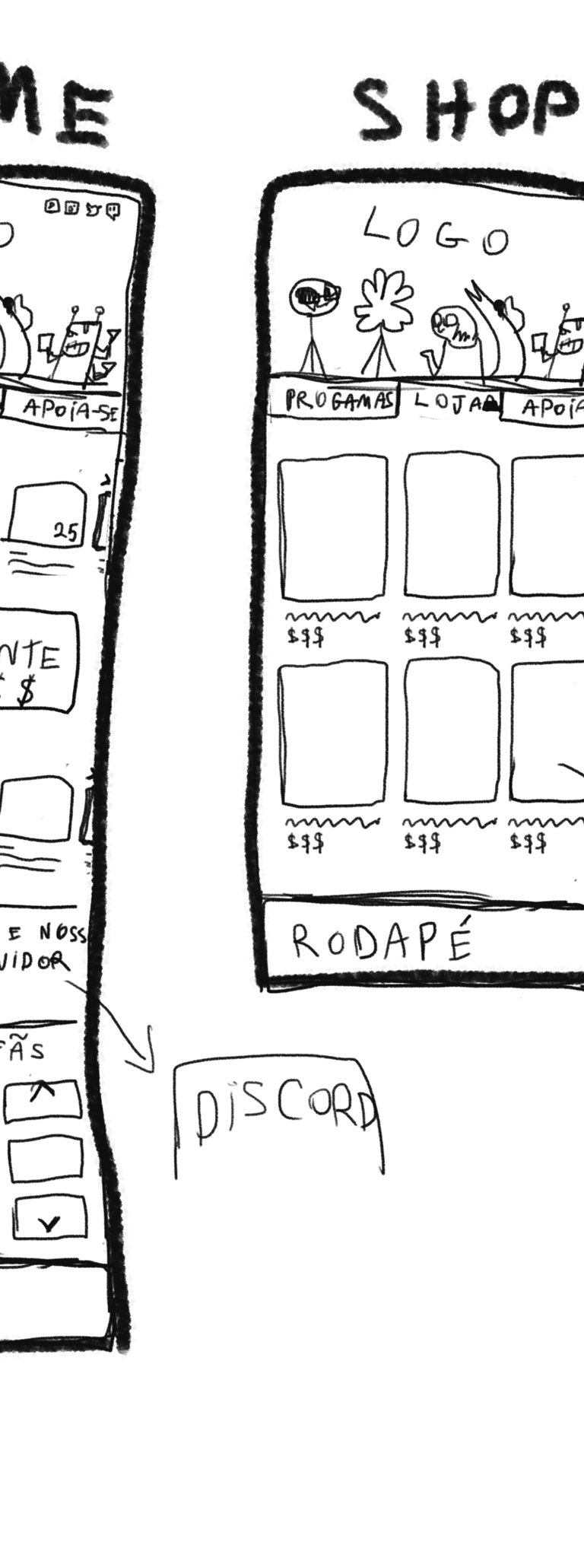
I mapped out the platform's features and, together with the developer, defined the MVP in three areas: a content hub, an e-commerce store, and a support page with QR codes for donations. Since interviewees don't want a complicated process to back a creator, I prioritized a simple flow and, based on that scope, designed the user flow.
Wireframing
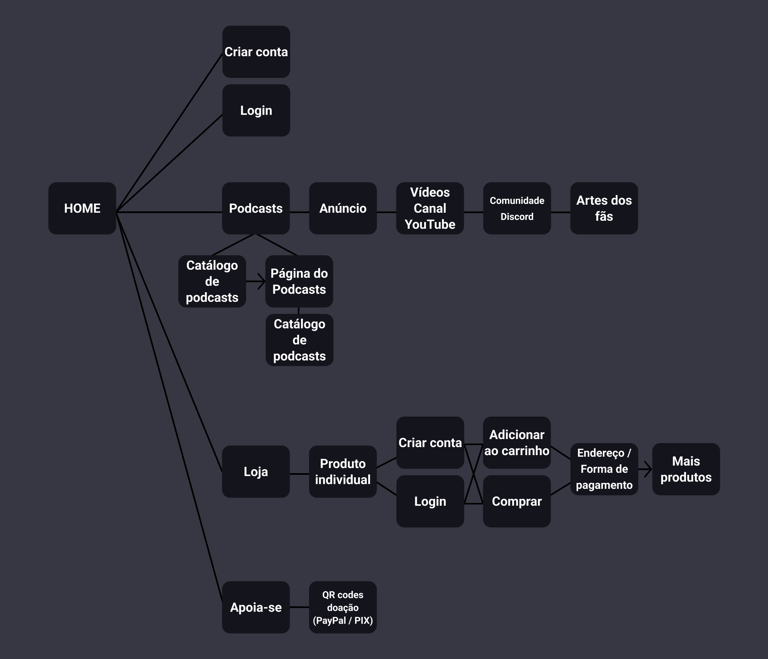
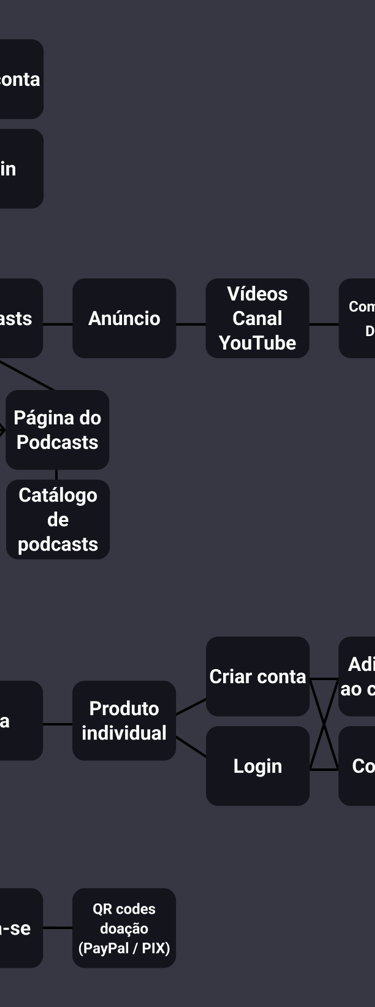
User Flow
Testing
Validating the Usability Flow with Users
At the end of the development of each of the platform's three areas, I ran a round of usability tests with 3 users, using a high-fidelity prototype. I asked them to complete tasks such as finding a product in the store and making a donation through the QR code, observing where they hesitated or made mistakes.
The tests helped me realize that the system lacked visual clarity, since some users had difficulty finding certain information. After making the necessary adjustments, I ran a new round of tests, when possible, to validate the effectiveness of the new solution.
Solution
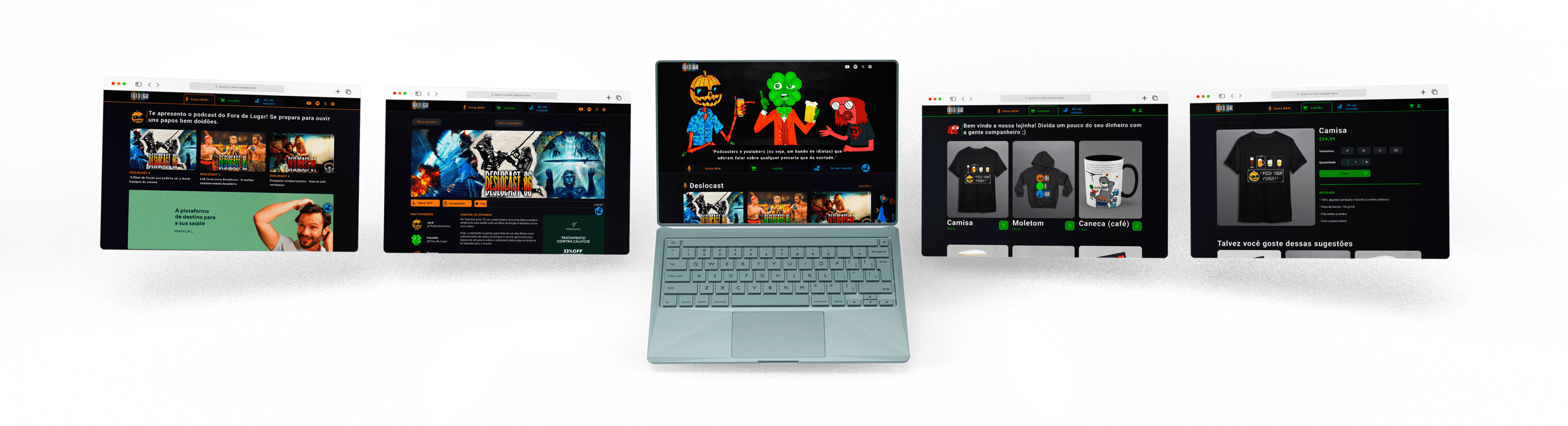
A space of their own for the community, with content, a store, and direct support, that reduces creators' dependence on platforms
Access to lost content
A monthly subscription plan that allows fans to access content that has been removed or restricted on major platforms.
Since this revenue comes directly from the community, creators are no longer forced to self-censor to avoid demonetization, allowing them to preserve the original vision of their work.


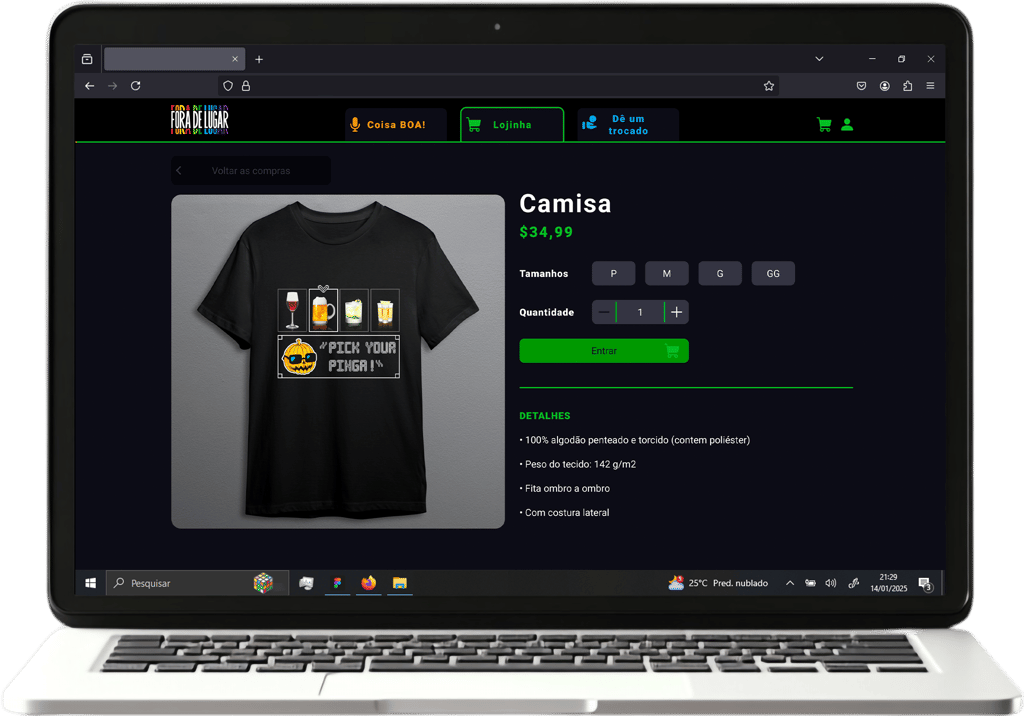
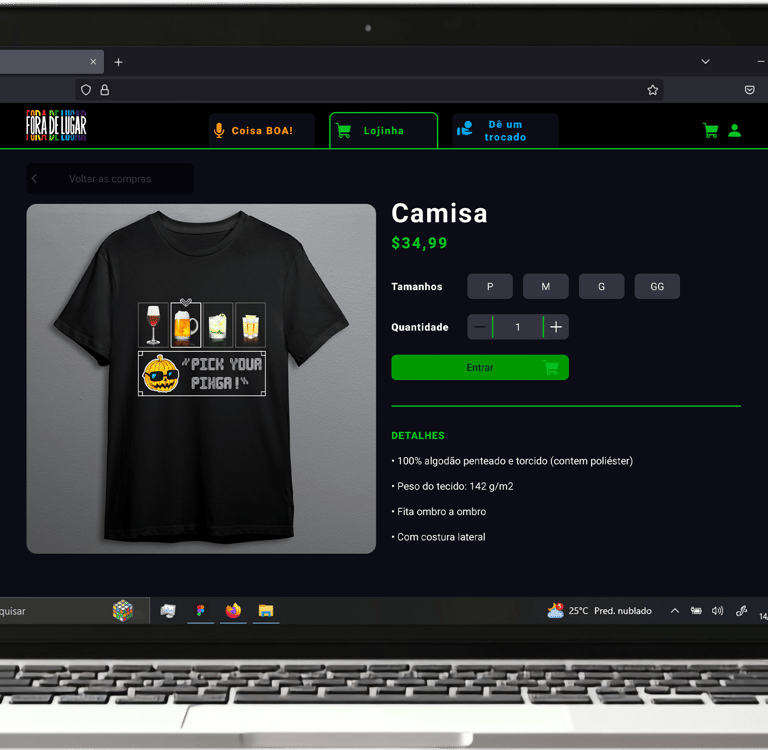
A digital store for the channel
An e-commerce space where creators sell exclusive products. This diversifies revenue, ensuring that demonetization on one platform does not significantly jeopardize the channel's income.
Space for fan donations
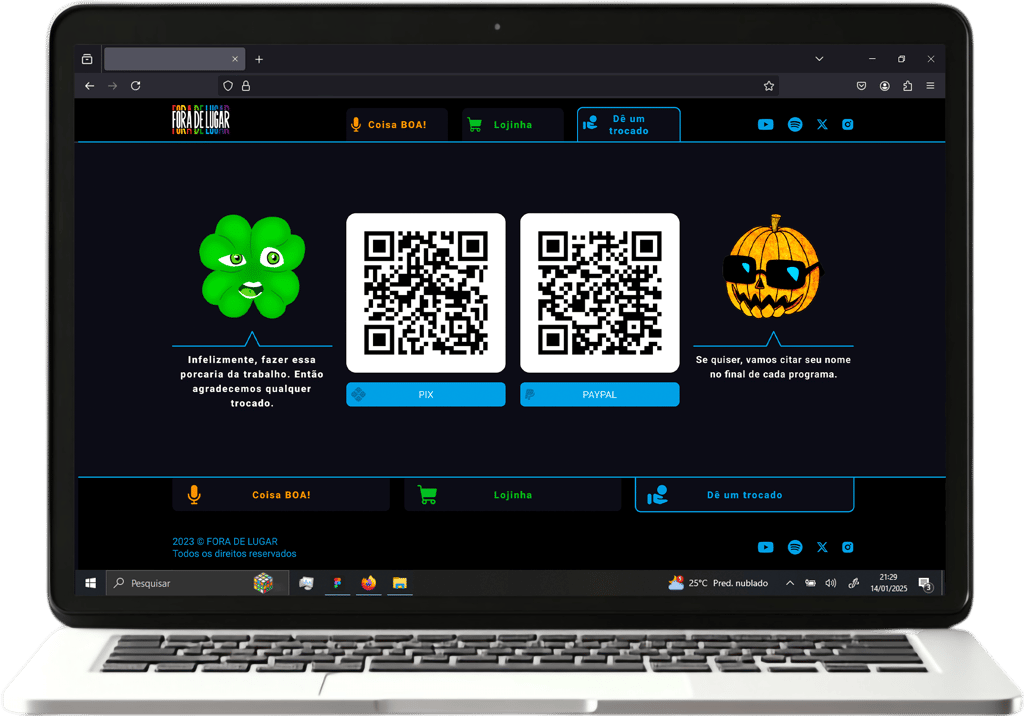
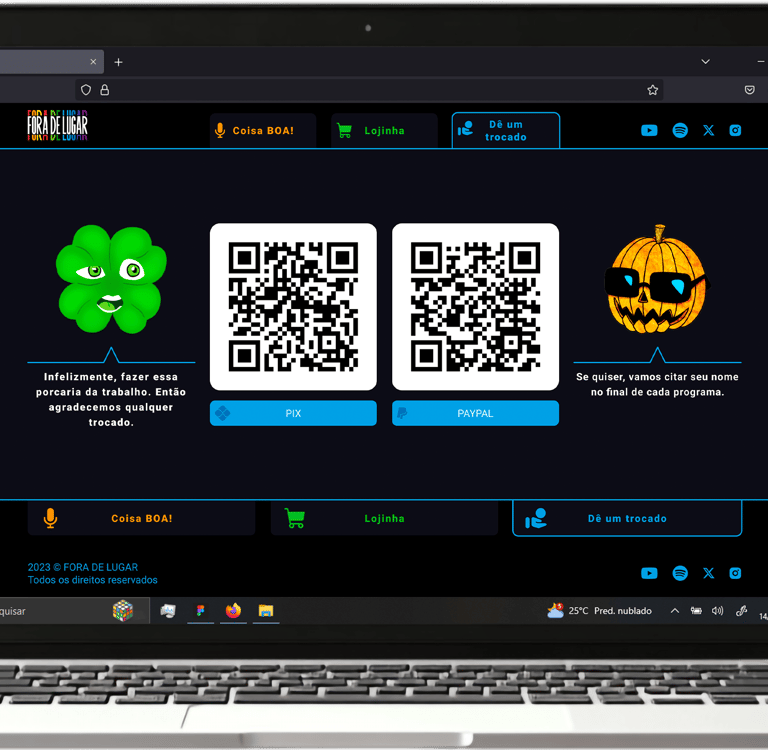
A single page that brings together all the ways a fan can contribute financially to the channel, simplifying the donation process.
This direct support ensures that the channel’s earnings do not have to be shared with any other platform.
Link to full Figma file: here
Lessons
What I'll do differently next time
Use different interview methodologies. Although I was able to find a diverse range of collaborators to participate in research and tests, my methods for finding them and conducting the meetings were not as efficient as they could have been. Therefore, I need to study different methodologies to optimize my time and generate more valuable results.
Define the color combination on the platform well before prototyping. Something I didn’t consider much before this project was how thinking in advance about color application can affect the usability of the screens once they stop being wireframes. When a platform has more than two main colors, it’s important to create a visual balance between each tone to allow a smoother transition between the prototype and the final product.


Private Brazilian platform for online government procurement/bidding.
Simplifying Online Bidding in Brazil
Growing a family business in their community
Delivery app for a lunchbox restaurant inside an apartment complex.

Other projects